

By H&H EXIM GLOBAL | Indian Spices Export & International Sourcing
India has long been recognised as one of the world’s most diverse sources of spices. From the golden colour of turmeric to the distinctive aroma of cumin and the bold flavour of black pepper, Indian spices bring character, depth and authenticity to cuisines across the globe.
But in international trade, great spices are about more than flavour. Buyers look for consistent quality, reliable sourcing, proper documentation, product specifications and dependable supply chains.
At H&H EXIM GLOBAL, we believe that successful spice exports begin with understanding what international markets actually need.
1. The Story Behind Every Indian Spice
Every spice has its own journey, from cultivation and harvesting to processing, packaging and international distribution.
India offers a diverse range of commercially important spices, including:
- Turmeric: Known for its golden colour and characteristic flavour, widely used in food processing, seasoning and spice blends.
- Cumin Seeds: Popular for their warm aroma and distinctive taste, used in food manufacturing and culinary applications.
- Coriander: Available in seed and powder forms, valued for its versatile flavour profile.
- Red Chilli: Supplied in different varieties and forms according to colour, pungency and buyer specifications.
- Black Pepper: An internationally traded spice used in seasoning, food processing and retail products.
- Fennel Seeds: Used in culinary preparations, seasoning blends and various food applications.
Each product serves different industries and purchasing requirements, making product selection an important part of international sourcing.
2. What International Spice Buyers Really Look For

For international importers, purchasing spices is not simply about finding the lowest price. They need suppliers who understand commercial requirements and can maintain consistency across orders.
Important purchasing considerations include:
Product Specifications: Buyers may require particular grades, sizes, colours, moisture levels, purity standards and processing methods.
Quality Assurance: Appropriate testing and inspection help buyers evaluate product suitability against their specifications and applicable regulations.
Consistency: Maintaining comparable quality between shipments is important for wholesalers, distributors and food manufacturers.
Packaging: Depending on the market, buyers may require bulk packaging, food-grade bags, customised packaging or private-label solutions.
Documentation: Export documentation, product declarations, certificates and applicable compliance records must be arranged according to the destination market and product.
3. From Raw Material to Export-Ready Products

A professional spice supply chain requires attention at every stage.
The typical sourcing and export process involves:
- Identifying suitable farms, processors and manufacturers.
- Selecting products according to buyer requirements.
- Reviewing available product specifications.
- Coordinating quality checks and required testing.
- Arranging suitable packaging and labelling.
- Preparing commercial and shipping documentation.
- Coordinating freight and international dispatch.
The objective is to create a transparent and dependable process between Indian suppliers and international buyers.
4. Why Product Traceability and Quality Matter
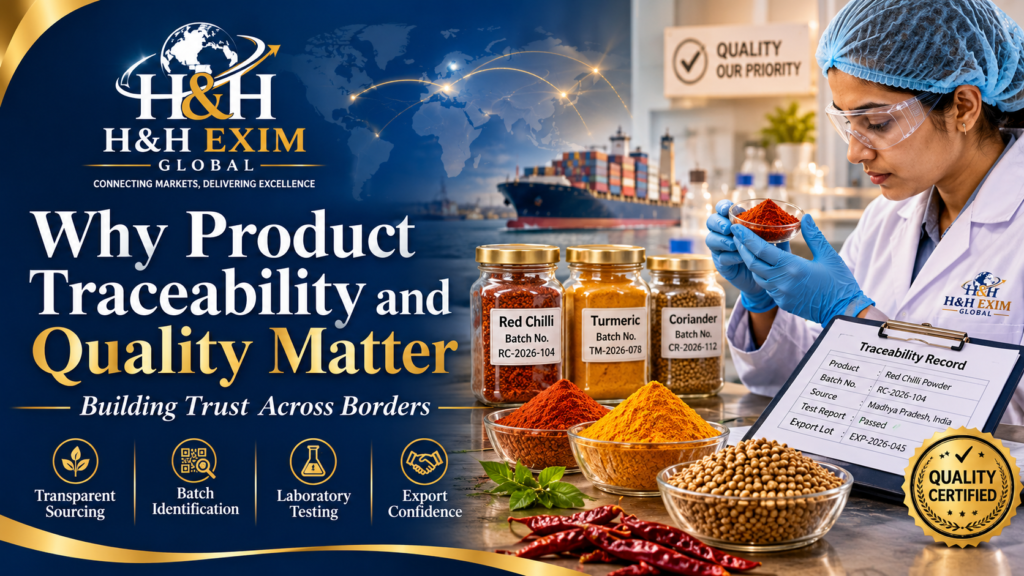
International food markets increasingly focus on product origin, safety and supply-chain transparency.
For spice importers, knowing where products originate and how they are processed can support purchasing decisions and compliance procedures.
Depending on the product and destination, buyers may request:
- Certificate of Analysis (COA)
- Microbiological test reports
- Pesticide residue test reports
- Heavy metal testing
- Fumigation certificates, where applicable
- Phytosanitary certificates, where applicable
- Country of Origin Certificate
- Relevant food safety and regulatory documentation
Requirements vary by destination, product classification and applicable regulations. Therefore, understanding the buyer’s import requirements before shipment is essential.
5. The Growing Opportunity for Value-Added Spice Products
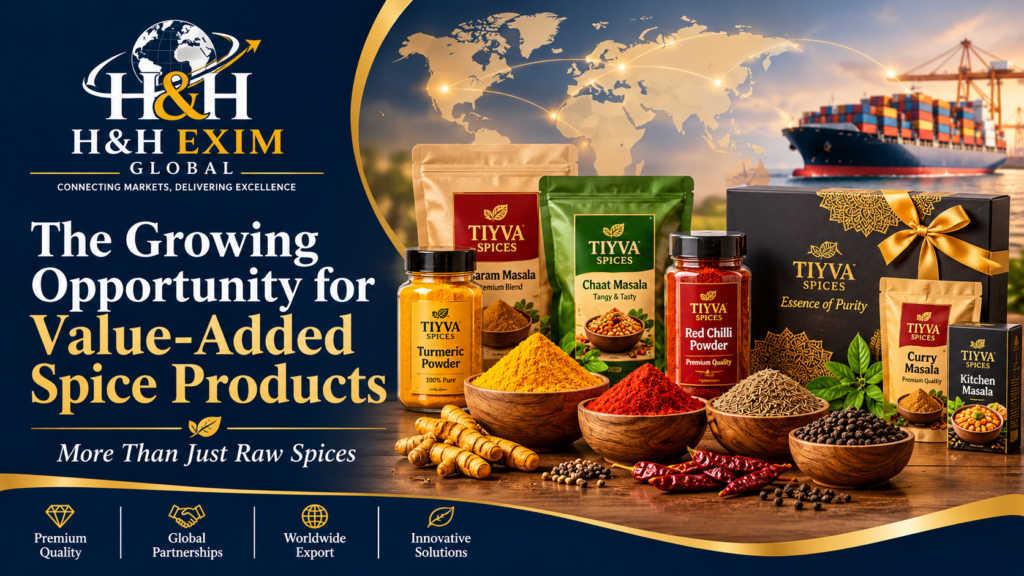
International spice trade is not limited to raw seeds and whole spices. There are opportunities across multiple product categories.
Some important product segments include:
Whole Spices
- Turmeric Finger
- Cumin Seeds
- Coriander Seeds
- Black Pepper
- Fennel Seeds
- Whole Red Chilli
Ground and Processed Spices
- Turmeric Powder
- Coriander Powder
- Red Chilli Powder
- Cumin Powder
- Black Pepper Powder
Customised Spice Solutions
- Blended Seasonings
- Custom Spice Mixes
- Bulk Industrial Spice Ingredients
- Private-Label Spice Products
For importers and distributors, these categories provide flexibility in building retail, wholesale and food manufacturing product portfolios.
6. Choosing the Right Indian Spice Sourcing Partner
A reliable sourcing partner can make international procurement more organised and efficient.
Before selecting an export partner, buyers should evaluate:
- Product availability and sourcing capabilities.
- Clear communication regarding specifications.
- Transparent commercial quotations.
- Quality documentation and inspection arrangements.
- Packaging flexibility.
- Export documentation support.
- Shipment coordination and communication.
Building long-term trade relationships requires trust, transparency and a clear understanding of both parties’ expectations.
7. H&H EXIM GLOBAL – Connecting Indian Spice Suppliers with Global Buyers
H&H EXIM GLOBAL works towards connecting international buyers with Indian suppliers through organised sourcing and export coordination.
Our approach focuses on understanding buyer requirements and coordinating suitable sourcing solutions for wholesale, distribution and business procurement.
Our spice sourcing portfolio includes:
- Turmeric and turmeric products
- Cumin seeds and cumin powder
- Coriander seeds and coriander powder
- Red chilli and chilli powder
- Black pepper
- Fennel seeds
- Other Indian spice varieties based on buyer requirements
We aim to support international procurement through professional communication, product coordination, packaging arrangements and export supply-chain assistance.
Whether you are a spice importer, wholesaler, distributor or food manufacturing business, we welcome opportunities to establish long-term trade relationships.
8. Let’s Build Your Next Spice Sourcing Partnership
Looking for Indian spices for your wholesale business, distribution network or food manufacturing requirements?
Connect with H&H EXIM GLOBAL to discuss your product specifications, quantity requirements, packaging preferences and destination market.
H&H EXIM GLOBAL
Connecting Markets, Delivering Excellence.
Website: https://handheximglobal.com/
*Contact us for Indian Spice Sourcing and Export Enquiries.